

In this era, students have developed different ways of engaging with education and learning. Traditional teaching methods, in which students are expected to sit, listen, and absorb information throughout a lesson, may no longer be as effective in maintaining students’ attention and motivation. With the rapid development of technology and changes in how students interact with information, educators are increasingly encouraged to explore new approaches that can make learning more engaging, interactive, and meaningful.
One approach that has gained increasing attention is Gamification in education. By incorporating game-like elements such as challenges, rewards, points, competition, storytelling, and interactive activities into the learning process, gamification can provide students with a more engaging way to participate in lessons. Rather than simply receiving information from the teacher, students are encouraged to actively interact with the learning content, make decisions, solve problems, and experience the consequences of their actions. As a result, gamification has the potential to create a classroom environment that is not only more engaging but also encourages students to become more active participants in their own learning.
Why Gamification?
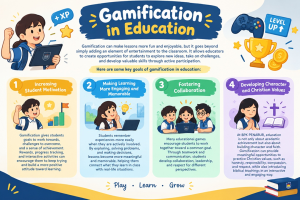
Gamification can make lessons more fun and enjoyable, but it goes beyond simply adding an element of entertainment to the classroom. It allows educators to create opportunities for students to explore new ideas, take on challenges, and develop valuable skills through active participation. Here are some key goals of gamification in education:
- Increasing Student Motivation : Learning something new can sometimes feel challenging, especially when students are unsure where to begin or how to apply what they have learned. Gamification can help make this process more approachable by introducing challenges, rewards, and clear goals that encourage students to keep trying. Instead of simply completing assignments, students can feel a sense of achievement as they progress through a lesson. This can encourage curiosity and motivate them to explore topics they might not have found interesting through traditional teaching methods.
- Making Learning More Engaging and Memorable : One of the most valuable aspects of gamification is its ability to turn students from passive listeners into active participants. Through interactive activities, simulations, storytelling, and problem-solving challenges, students can learn by doing rather than simply listening to explanations. These experiences give students opportunities to discover concepts, make decisions, and learn from their mistakes. As a result, lessons can become more meaningful and memorable, helping students connect what they learn in the classroom with real-life situations.
- Fostering Collaboration : Many educational games encourage students to work together, communicate, and solve problems as a team. Whether they are completing a group challenge, sharing ideas, or helping one another reach a common goal, students develop important collaboration skills along the way. Gamification can also provide opportunities for students to learn from their peers, appreciate different perspectives, and understand the value of teamwork. These skills are essential not only in the classroom but also in their future academic and professional lives.
- Developing Character Through Learning : At BPK PENABUR, education is not only about academic achievement but also about developing students’ character as Christians. Gamification can support this goal by creating meaningful situations where students practice values such as honesty, responsibility, kindness, perseverance, and respect for others.
For example, a classroom challenge may encourage students to help a teammate, make an honest decision, or take responsibility for the consequences of their actions. Lessons related to Christianity can also be incorporated into interactive stories, challenges, and discussions, allowing students to explore Christian values through their own experiences. In this way, gamification can become more than a tool for delivering knowledge. It can also provide a space where students practice living out the values they learn, making character building a natural part of the learning process.
A Meaningful Way to Learn
Gamification is not about turning every lesson into a competition or replacing teachers with games. Instead, it is about using game-like experiences to support meaningful learning. When designed with clear educational goals, gamification can help students become more motivated, engaged, collaborative, and reflective learners while supporting the character-building values that are central to education.
Author: Frederick Osmond Antoinette,
Curriculum & Evaluation,
PENABUR Intercultural School